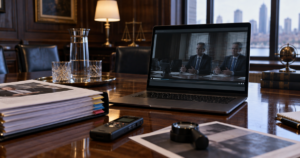
Two of the companies building the most capable image and video models just told the federal judiciary, in effect, not to count on spotting their output. As Dr. Alex Wissner-Gross noted in The Innermost Loop on October 18, OpenAI and Meta “warned judges that deepfakes may become undetectable.” The forum was the October 15 meeting of the federal Advisory Committee on Evidence Rules, which is weighing a new rule for deepfake evidence. If your business could end up in court, and most do eventually, this affects how you prove your case and how you defend against fake evidence used against you.
What Happened, and Why Business Owners Should Care
According to Reuters’ report of the meeting, OpenAI’s policy counsel told the committee she does not expect a scientific method that can reliably detect AI-generated images going forward, partly because every company uses its own watermarking system. A Meta product director said people can no longer tell media from recent models apart from the real thing, and that making it now takes little time or money.
The committee’s own materials say much the same. The October 2026 agenda book notes that the committee has worked on deepfakes at its last seven meetings and has a draft Rule 901(c) it “has prepared, but not finally approved.” The draft Committee Note explains why. It says “any member of the public now has the capacity to make a deepfake, with little effort and expense.”
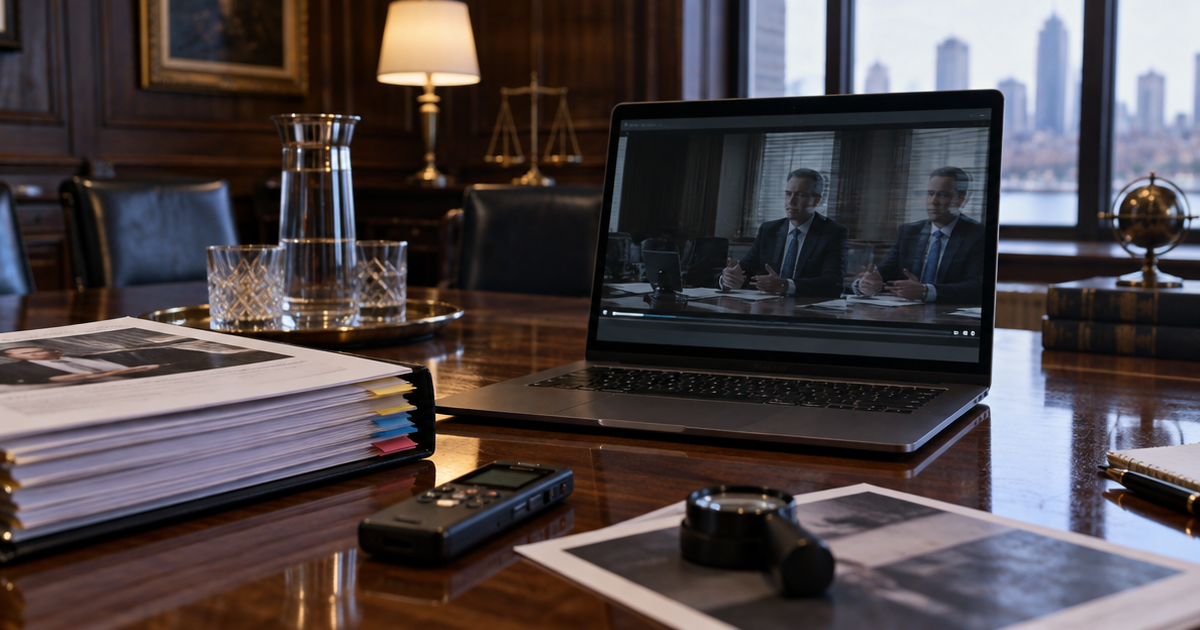
Business disputes run on exactly the kind of material that is now easy to fake: recorded calls, screenshots of texts, video of a job site, a voicemail from a partner, a photo of damaged goods. A fake recording of an executive can derail a partnership dispute. A real recording can be waved off as “probably AI.” Both versions of the deepfake evidence problem are coming to court.
The Legal Impact: 6 Rules on Deepfake Evidence
1. Today’s authentication bar is low, which cuts both ways
Under Federal Rule of Evidence 901(a), the party offering an item only needs “evidence sufficient to support a finding that the item is what the proponent claims it is.” Illinois Rule of Evidence 901(a) uses essentially the same standard. In practice, a witness who says “that’s his voice” or “that’s my warehouse” usually gets a recording in front of the jury. The committee’s May 2026 minutes put the problem plainly. Under current law, that kind of recognition testimony can send a potentially fabricated video to the jury even when the other side has raised a credible deepfake challenge.
2. The proposed Rule 901(c) would make the judge the gatekeeper
The working draft for deepfake evidence sets up two steps. First, a party claiming fabrication by generative AI “must present evidence sufficient to support a finding of fabrication.” Simply shouting “fake” is not enough. Second, if that showing is made, the evidence comes in “only if the proponent demonstrates to the court that it is more likely than not authentic.” That is the preponderance standard of Rule 104(a), a real step up from today’s threshold. The draft also requires reasonable pretrial notice of a fabrication challenge.
3. It is not the law yet, and may not be for years
Be clear on the status. Draft Rule 901(c) has not been published for public comment. The Justice Department told the committee in May it does not believe the rule is ready, and at least one member argued that existing rules already handle forgeries. The committee’s chair noted that even a summer 2026 publication would not have produced an effective date before December 1, 2028. The companion proposal on machine-generated evidence, Rule 707, drew more than 70 written comments and was withdrawn in May for a modified version to be studied further. For now, judges are handling deepfake evidence challenges under the rules already on the books, with a lot of discretion.
4. Deepfake evidence is still rare in court, but the penalties are real
A Federal Judicial Center survey summarized in the committee’s minutes found that only 15 of 931 responding federal trial judges had encountered a deepfake challenge. That number will grow. The Reporter’s memo also describes a Kentucky custody case, Adams v. Anderson (Ky. Ct. App. May 29, 2026), where a parent who submitted an altered photo and fake records was held in contempt and sentenced to 45 days in jail, a result the appellate court upheld. Submitting fabricated evidence also exposes lawyers to sanctions under Federal Rule of Civil Procedure 11 and professional discipline.
5. The “liar’s dividend” is the bigger business risk
For most companies, the more likely deepfake evidence problem is not a forged video. It is a genuine recording, email or photo that the other side attacks as AI-generated. If the rule is adopted as drafted, a credible challenge would shift the burden onto you to prove authenticity more likely than not. The evidence that wins that fight is provenance: original files, metadata, system logs, and a clean chain of custody. That makes record-keeping a litigation strategy, just as we explained for AI chat logs in discovery.
6. Expect cost and delay in owner and partner disputes
Close-held company fights often turn on informal evidence like texts, voice memos and call recordings. In a partner removal or a business deadlock, a credible deepfake objection can mean a forensic expert on each side and an extra evidentiary hearing. This is our reading of where practice is heading, not settled law, but the budget for authentication fights should go up.
What Howard East Clients Should Do Now
- Preserve originals, not copies. Keep native files with metadata intact. A forwarded screenshot is much weaker than the original device export or system record.
- Turn on audit trails. Use systems that log who created, sent and edited records. Our electronic signature policy guide covers why audit trails matter in contracts.
- Address it in your contracts. Consider clauses that name the system of record and require notice and cooperation if a party disputes the authenticity of a recording or document.
- Vet evidence before you rely on it. Deepfake evidence can come from your own side. If an employee or partner hands you a recording that seems too good, have counsel review it before it goes in a demand letter or court filing.
- Know your own AI content. If your company publishes synthetic images or audio, label and track it, as we discussed in AI marketing photos and the EU AI Act transparency rules.
- Call early. If a dispute is brewing and either side’s case depends on recordings or digital media, get litigation counsel involved before evidence is lost or challenged. Our affiliated firm handles commercial litigation in Illinois.
Deepfake evidence is a rules fight that will play out over years, but your evidence is being created today. The businesses that can prove what is real will have the advantage.
Facing a dispute where digital evidence matters? Book a consultation with Howard East to talk through business litigation strategy, evidence preservation and contract protections. You can also request a free consultation through Howard Law Group.
This article is for informational purposes only and does not constitute legal advice. Draft Rule 901(c) is a working proposal that has not been adopted, and evidence rules vary by jurisdiction. Consult an attorney about your specific situation.